
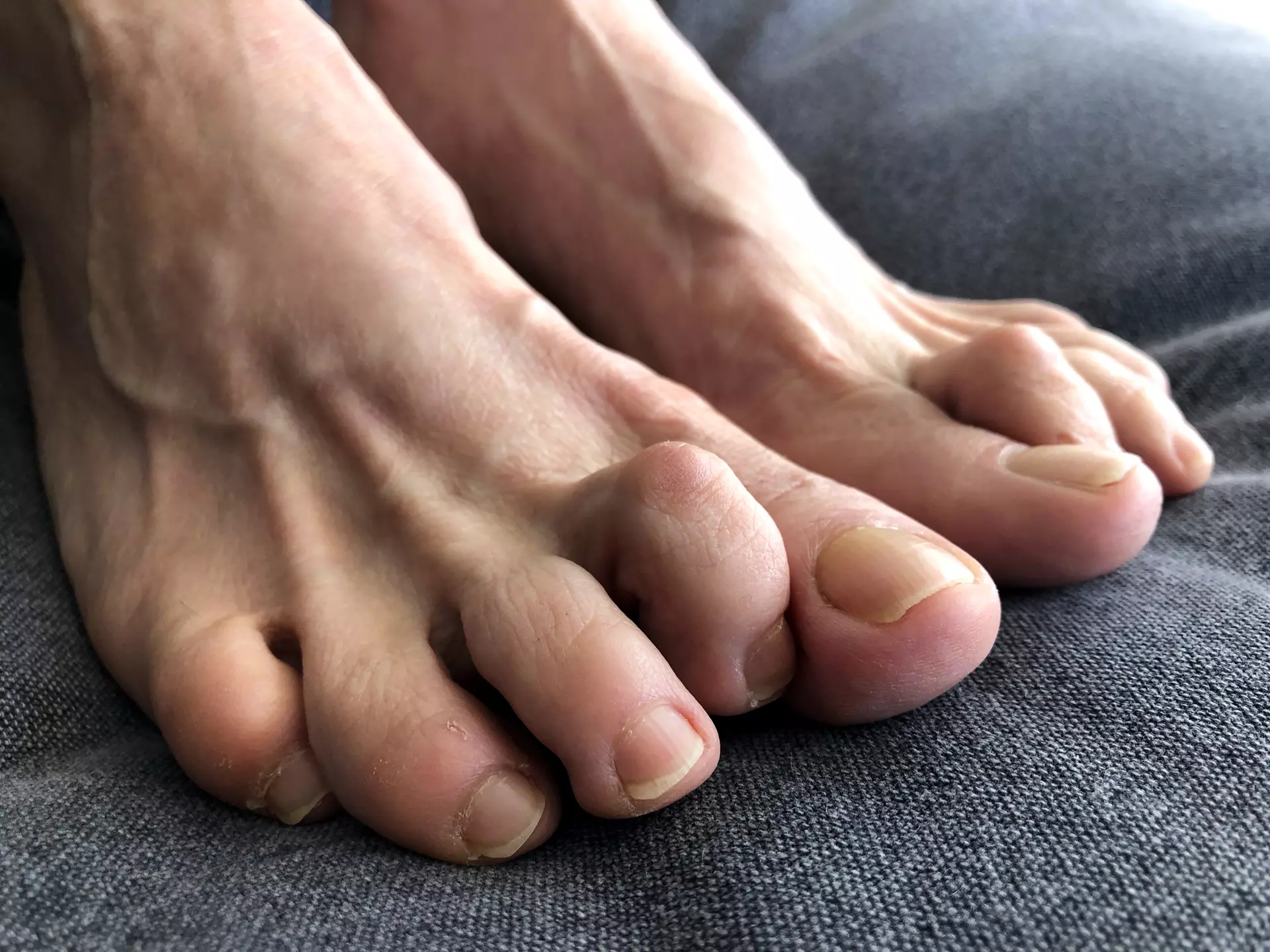
What is a Hammertoe Deformity?
A hammertoe is a contracture, or bending, of the joint in the second, third, or fourth toe. This bending forces the joint to protrude upward, which creates painful friction against footwear and often results in corns and calluses.
Request an AppointmentCauses and Progression
Hammertoes are primarily caused by an imbalance in the muscles, tendons, or ligaments that normally hold the toe straight:
- Improper Footwear: Wearing narrow, tight, or pointed shoes that squeeze the toes into a bent position.
- Muscle/Tendon Imbalance: An underlying imbalance causes certain tendons to pull harder, leading to the contracture.
- Foot Structure: Patients with a long second toe or a specific type of arch are more prone to the condition.
- Progression: Hammertoes are initially flexible but become rigid and permanent over time if untreated.
Recognizing Hammertoe Symptoms
Symptoms are most noticeable when wearing shoes that put pressure on the contracted toe joint:
- Pain and Stiffness: Discomfort in the affected toe or the ball of the foot.
- Corns and Calluses: Hardened skin forming on top of the bent joint, at the tip of the toe, or between toes, caused by rubbing.
- Inflammation: Redness and swelling around the affected joint.
Treatment Options for Straightening the Toes
Treatment is determined by whether the hammertoe is flexible or rigid, starting with an evaluation at the Reisterstown Office.
- Conservative Treatment (Flexible Stage):
- Shoe Modification: Switching to deeper and wider toe-box shoes.
- Pads and Splints: Using silicone padding or toe splints to reposition the toe and prevent friction.
- Custom Orthotics: To address the mechanical imbalance in the foot that contributes to the contracture, provided at our Glen Burnie Office.
- Surgical Correction (Rigid Stage):
- Tendon Release: For early rigid cases, releasing the tight tendons.
- Arthroplasty/Fusion: Procedures that permanently straighten the toe, eliminating the friction and pain.