
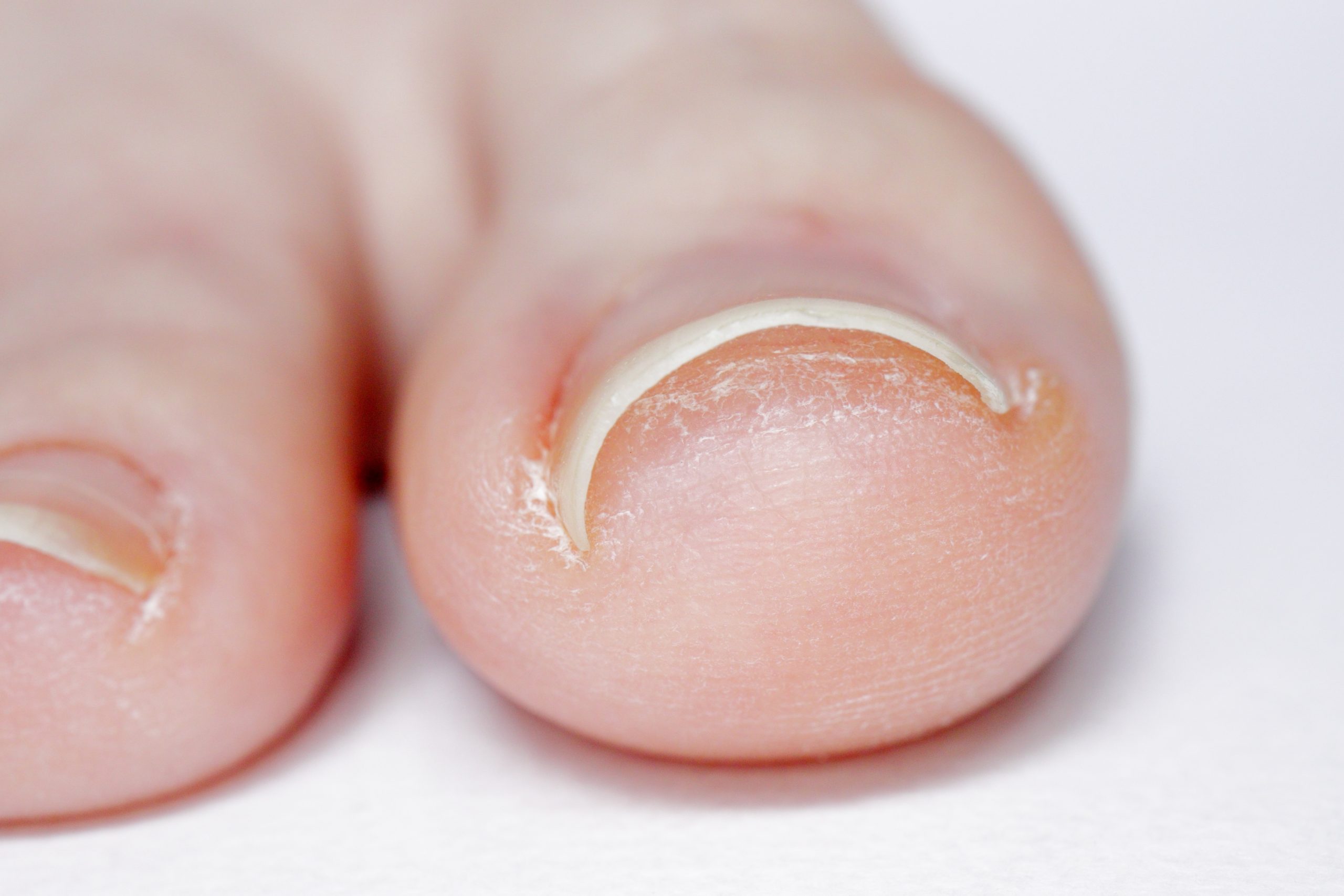
What is an Ingrown Toenail?
An ingrown toenail (Onychocryptosis) occurs when the edge of the toenail, usually the big toe, grows into the soft flesh along the nail groove. This causes pain, redness, swelling, and can rapidly lead to a bacterial infection, requiring immediate care at the Foot Centers of Maryland Overlea Office.
Request an AppointmentCauses of Ingrown Toenails
While simple trauma can cause an ingrown nail, they are most often a result of improper nail care or inherited structure:
- Improper Trimming: Cutting the nails too short or rounding the corners down, which encourages the nail to grow into the skin.
- Tight Footwear: Shoes that press the nail plate into the surrounding soft tissue.
- Inherited Nail Shape: Some individuals naturally have nail plates that are curved or involuted (pincer nails).
- Trauma: Kicking or stubbing the toe can cause the nail to puncture the skin.
Symptoms Requiring Professional Care
You should seek professional help at the Reisterstown Office if you notice:
- Intense Pain: Persistent tenderness, throbbing, or sharpness along the nail border.
- Redness and Swelling: Inflammation that spreads beyond the nail border.
- Infection: Drainage (pus), warmth, and the presence of angry, red, weeping tissue (granulation tissue).
Treatment Options for Relief and Prevention
It is critical to avoid “bathroom surgery,” especially if you have diabetes.
- Partial Nail Avulsion: A quick, in-office procedure where, after numbing the toe, we gently remove only the small, offending piece of the nail border. This provides instant relief.
- Permanent Correction (Matrixectomy): For chronic or recurrent ingrown nails, we can apply a chemical solution to the nail root (matrix) after removing the border. This prevents that section of the nail from ever growing back, offering a permanent solution.